
Moon Phase Soulmate Calculator — Find Your Cosmic Match by Birthday (Free)
🌙 Someone shared their Moon Reading with you!
Scroll down to see the full cosmic compatibility report — then calculate your own below.
Moon Phase Soulmate Calculator
Enter both birth dates for a detailed lunar compatibility reading — personality analysis, compatibility scores, love advice & more.
■ Person 1 ■ Person 2 ■ Both same
What Is a Moon Phase Soulmate?
A moon phase soulmate is someone whose natal moon phase — the lunar phase present at the moment of their birth — harmonizes with yours in a way that creates natural emotional resonance. This concept comes from synastry, a branch of astrology that has been used for thousands of years to study relationship dynamics through planetary and lunar positions at birth.
The moon governs our emotional core: how we love, what we need from a partner, how we process feelings, and what drives our deepest sense of belonging. When two people’s birth moon phases align or meaningfully complement each other, they often report feeling understood without explanation — a connection that feels less like coincidence and more like pattern.
Your moon phase soulmate is not necessarily the person who shares your exact phase. Compatibility is measured across six ranges: Conjunct (same phase), Sextile (60° apart), Trine (120° apart), Square (90° apart), Opposite (180° apart), and Aversion — each producing a distinct relational dynamic.
Key distinction: A moon phase soulmate brings emotional ease and complementary energy. A twin flame, by contrast, is a mirror connection — intense, transformative, and often unstable. Soulmate compatibility is about harmony; twin flame is about growth through friction.
How the Moon Phase Compatibility Calculator Works
This free tool uses your birth date to identify which of the eight lunar phases the moon occupied at the moment of your birth. It then cross-references both birth profiles against astronomical lunar data to measure the angular distance between your two natal moon phases.
Step 1— Enter your birth date
Your date of birth is the foundation. The exact day you were born places the moon in one of eight phases, encoding emotional traits and relational tendencies that astrologers have tracked across centuries of natal chart practice.
Step 2 — Enter your partner's birth date
The calculator identifies their natal moon phase independently, then measures the degree separation between both phases across the 29.5-day lunar cycle.
Step 3 — Receive your compatibility result
Your result includes your moon phase names, your compatibility category (Conjunct through Aversion), a compatibility score, and a personalized explanation of what your specific pairing means for your emotional bond, communication style, and long-term relationship potential.
The calculator does not store your data. All calculations run client-side based on your birth dates.
All 8 Moon Phases: Personality, Love Style & Best Matches
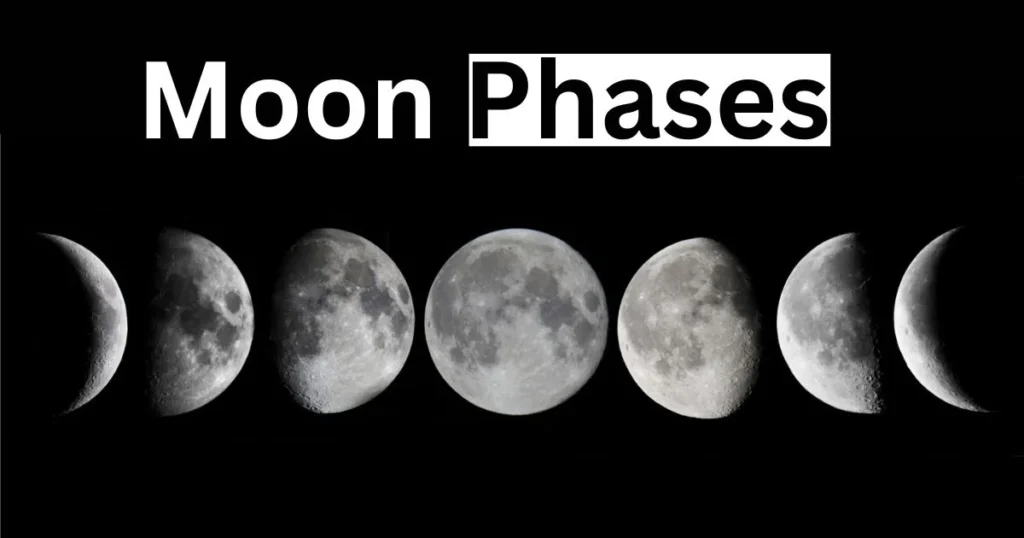
The moon completes a full cycle in approximately 29.5 days, spending roughly 3.5 days in each of its eight primary phases. Each phase imprints a distinct emotional blueprint onto people born under it.
🌑 New Moon (Days 1–3.5)
Core traits: Visionary, idealistic, instinctive, bold, emotionally internal
New Moon individuals are initiators. They carry a restless hunger for fresh starts and approach relationships with genuine openness rather than caution. Their emotional life is largely interior — they process deeply before expressing, which can make them appear reserved even when intensely invested.
In love, New Moon souls need partners who match their appetite for growth and tolerate uncertainty. They are drawn to possibility over certainty, making them exceptional long-term partners once they feel safe enough to commit.
Best matches: Full Moon (natural opposition creates powerful balance), First Quarter (shared forward momentum) Compatibility note: Two New Moon people share identical emotional rhythms — deep understanding, but potential for shared blind spots
🌒 Waxing Crescent Moon (Days 3.5–7)
Core traits: Optimistic, ambitious, security-seeking, quietly determined
Waxing Crescent people present confident optimism while quietly managing underlying insecurity. Their positivity is earned through effort, not inherited. They value emotional reliability above passion — they want a partner they can count on, not one who keeps them guessing.
In relationships, they offer consistent encouragement and need it returned in equal measure. Their ideal bond is built through shared goals and steady reassurance.
Best matches: First Quarter (shared ambition and drive), Full Moon (grounding stability meets forward energy) Compatibility note: Works well with phases that provide emotional security and purposeful direction
🌓 First Quarter Moon (Days 7–10.5)
Core traits: Action-oriented, decisive, challenge-driven, emotionally resilient
First Quarter Moon individuals are the practitioners of the lunar cycle — they don’t reflect, they act. They require friction to feel alive, which makes them naturally compatible with partners who can push back without becoming destabilized.
These are not conflict-averse people. They grow through challenges and need relationships that offer both safety and stimulation. A partner who shrinks from their directness will frustrate them; one who matches their pace and honors their decisiveness will earn lasting loyalty.
Best matches: Waning Crescent (sage balances the problem-solver), Waxing Crescent (shared drive and ambition) Compatibility note: According to astrologer Jaime Wright, First Quarter and Waning Crescent actually make a great professional and romantic team
🌔 Waxing Gibbous Moon (Days 10.5–14)
Core traits: Analytical, perfectionist, spiritually oriented, improvement-focused
Waxing Gibbous people measure every outcome against an internal standard most people never consciously develop. Their perfectionism is not vanity — it reflects a genuine drive toward refinement that shapes both their self-development and their approach to partnership.
Their core relational challenge is surrendering control. They thrive when paired with someone who pulls them from hyper-analysis into presence, who values depth but knows when to stop refining and simply experience.
Best matches: Disseminating/Waning Gibbous (teacher-student wisdom exchange), Waning Crescent (grounds their intensity with intuitive wisdom). Compatibility note: Needs a partner who disrupts over-thinking rather than mirroring it
🌕 Full Moon (Days 14–17.5)
Core traits: Emotionally intense, empathic, magnetic, relationship-centered
Full Moon individuals are the most emotionally available people in the lunar cycle. They arrive in relationships fully — no gradual easing in, no withholding. Their emotional depth is a gift and, without the right partner, a vulnerability.
They crave a partner who can hold their intensity without flinching. Beneath their magnetic exterior is a need for genuine emotional mirroring — someone equally present, equally invested, equally unafraid of depth.
Best matches: New Moon (the “opposites attract” soulmate pairing — together they form a complete lunar cycle), Waxing Crescent (adventure meets emotional depth) Compatibility note: Full Moon + New Moon is considered the classic soulmate pairing on TikTok and in synastry because their phases visually combine into a complete circle
🌖 Waning Gibbous / Disseminating Moon (Days 17.5–21)
Core traits: Wise, reflective, generous with knowledge, values-driven
Waning Gibbous people accumulate wisdom and share it naturally. They are relationship teachers — not in a controlling way, but in the sense that they process experience deeply and offer insight freely. Their partners gain perspective simply by being near them.
They require intellectual reciprocity. A relationship without mutual curiosity and shared values quietly drains them. They need someone equally invested in understanding why, not just experiencing what.
Best matches: Waxing Gibbous (refinement meets wisdom in a beautiful exchange), New Moon (young at heart meets seasoned understanding) Compatibility note: Strong values alignment is non-negotiable for lasting compatibility
🌗 Last Quarter Moon (Days 21–24.5)
Core traits: Transformative, release-oriented, evolution-driven, unconventionally committed
Last Quarter individuals are wired for change. They do not maintain relationships through nostalgia — they sustain connection by continuously building toward something neither partner has previously known. Stagnation is genuinely painful for them.
Their greatest gift in relationships is complete support during reinvention. When they commit, they commit to your evolution — the uncertain, messy, beautiful process of becoming.
Best matches: Waning Crescent (intuitive depth supports the transformer), Waning Gibbous (shared capacity for release and reflection) Compatibility note: Needs partners who treat growth as a shared adventure, not a threat
🌘 Waning Crescent / Balsamic Moon (Days 24.5–29.5)
Core traits: Introspective, spiritually attuned, deeply intuitive, solitude-valuing
Waning Crescent people are frequently misread as aloof. Their apparent distance is profound introspection — a deliberate retreat into internal processing that generates the spiritual clarity others seek externally. They don’t withdraw from love; they prepare themselves more carefully for it.
They paradoxically attract intense, passionate connections despite craving peaceful depth. Their ideal partner respects their need for solitude while remaining drawn to their quiet inner fire.
Best matches: First Quarter (sage and problem-solver complement each other), Last Quarter (shared capacity for endings and new cycles) Compatibility note: Often associated with karmic connections and deeply fated relationships in synastry tradition
Moon Phase Compatibility Chart — All Pairings Explained
Your Phase | Best Match | Compatible | Growth Pairing |
New Moon | Full Moon | First Quarter | Waning Crescent |
Waxing Crescent | First Quarter | Full Moon | Last Quarter |
First Quarter | Waning Crescent | Waxing Crescent | Full Moon |
Waxing Gibbous | Waning Gibbous | Waning Crescent | New Moon |
Full Moon | New Moon | Waxing Crescent | First Quarter |
Waning Gibbous | Waxing Gibbous | New Moon | Last Quarter |
Last Quarter | Waning Crescent | Waning Gibbous | Waxing Crescent |
Waning Crescent | First Quarter | Last Quarter | Waxing Gibbous |
The 6 Compatibility Ranges (from synastry tradition):
- Conjunct (0°) — Same phase; shared rhythms, deep mutual understanding, but you endure life’s highs and lows simultaneously
- Sextile (60°) — Friendly, flowing energy; natural ease in daily emotional exchange
- Trine (120°) — Harmonious, effortless connection; similar emotional languages
- Square (90°) — Tension that drives growth; dynamic but requires active communication
- Opposite (180°) — Classic “opposites attract”; each partner provides what the other lacks
Aversion — Different emotional frameworks; can work through conscious effort and mutual respect
Moon Phase Soulmate vs. Twin Flame — The Real Difference
These two concepts are frequently collapsed into one, but they describe fundamentally different relationship dynamics.
A moon phase soulmate offers emotional resonance and complementary energy. The connection feels supportive and stabilizing — like coming home. These relationships grow through ease and shared rhythm, not crisis.
A twin flame is a mirror connection — the idea of a shared soul split into two people. Twin flame relationships are transformative but frequently difficult, marked by cycles of attraction and separation, intense emotional challenge, and confrontation with your own unresolved patterns. The TikTok tradition holds that people born under the same moon phase are twin flames, sharing identical energy and personality traits.
For most people seeking lasting partnership, a moon phase soulmate offers more sustainable and fulfilling compatibility. As astrologer Dana DeFranco notes, the twin flame concept, while romantic, can sometimes excuse volatile or toxic relationship behavior patterns.
The Spiritual and Emotional Meaning of Lunar Compatibility
Across astrological traditions, the natal moon is considered the single most important placement for understanding emotional compatibility. The AstroTwins describe moon signs as “kind of everything for compatibility” — more significant than sun signs for long-term relationship success because the moon governs your hidden emotional self: what you need, how you receive love, what makes you feel safe.
Couples who share compatible natal moon phases consistently report a sense of being understood without explanation — as though their emotional language was written by the same hand. This isn’t mysticism; it reflects genuine overlap in emotional temperament, need structures, and relational rhythms.
Practically speaking, compatible moon phases tend to produce:
- More intuitive communication without over-explaining
- Naturally aligned emotional needs around closeness and space
- Shared responses to stress and vulnerability
- Easier navigation of conflict without fundamental misunderstanding
This is why moon sign analysis in synastry goes beyond romantic compatibility — the same framework applies meaningfully to close friendships, family relationships, and even professional partnerships.
Is the Moon Phase Soulmate Concept Real or a Trend?
The honest answer sits between mythology and mechanism.
The concept gained massive mainstream visibility through a TikTok filter that overlays two people’s birth moon phases to see if they form a complete circle — a visual metaphor for wholeness. This democratized access to an idea rooted in thousands of years of astrological synastry practice.
From a scientific standpoint, no peer-reviewed studies confirm that natal moon phases predict relationship success. Astrology operates outside the framework of empirical validation, and any honest discussion of this topic should acknowledge that clearly.
From a practical standpoint, the moon phase soulmate framework functions as a genuinely useful reflective tool. Understanding your own natal moon phase — and your partner’s — provides real insight into emotional temperament, relational needs, and communication tendencies. Many couples find it helps them articulate dynamics they’d previously struggled to name.
The Old Farmer’s Almanac notes that while the TikTok trend may oversimplify, the underlying concept of lunar influence on emotional life has genuine astrological depth worth exploring.
Bottom line: Treat it as a meaningful lens for self-reflection and relationship understanding — not as a definitive verdict on compatibility.
How to Find Your Moon Phase Manually
You don’t need a calculator to identify your natal moon phase, though it’s the fastest method. Manually, you can:
- Look up your birth date in a historical lunar almanac (sites like AstroSeek maintain complete archives)
- Identify the moon’s illumination percentage on that date — this determines the phase
- Cross-reference the phase against the 8-phase framework
- Repeat for your partner’s birth date and compare the degree difference
The manual approach builds familiarity with lunar cycles that makes the compatibility framework feel embodied rather than algorithmic. Serious astrology practitioners recommend doing this at least once before relying on digital tools.
Scientifically proven validity remains debated, yet studies reveal lunar influences genuinely affect personalities and emotions. The mechanism connecting moon phases to relationship dynamics provides a unique perspective, making this thought-provoking tool surprisingly insightful beyond surface-level compatibility assessments.
Practitioners find natal moon phase analysis reveals strengths and potential challenges within relationships. While science questions interpretations, the playful exploration of lunar patterns offers accurate enough insight into dynamics that many consider it meaningfully backed by classic astrological wisdom.
Moon Phase Compatibility Beyond Romance
Natal moon phase compatibility extends meaningfully to non-romantic relationships. The same framework that explains emotional resonance between partners also illuminates:
Friendships: Why certain people feel immediately easy to be around while others require constant emotional translation — often traceable to compatible or incompatible lunar phases.
Family dynamics: Understanding a parent’s or sibling’s natal moon phase can reframe long-standing tension as difference in emotional language rather than fundamental incompatibility.
Professional partnerships: Complementary moon phases in working relationships predict natural ease in collaboration, communication style alignment, and shared approach to stress and problem-solving.
A soulmate, as the Oxford English Dictionary defines it, is simply “a person who shares a deep understanding or bond with another.” That bond is not exclusively romantic — and the lunar framework reflects that breadth.
Frequently Asked Questions (FAQs)
What moon phase do twin flames have?
Twin flames are often believed to have complementary or opposite moon phases — such as New Moon and Full Moon — creating a powerful, balanced cosmic pull that feels destined and deeply transformative.
What are the signs of a true soulmate?
A true soulmate brings effortless understanding, emotional depth, and a sense of familiarity — you feel genuinely seen, supported, and challenged to grow in the healthiest way.
Which moon signs are loyal?
Moon signs in Taurus, Cancer, Scorpio, and Capricorn are widely considered the most loyal, as they crave emotional security, deep commitment, and long-lasting bonds.
Is the moon phase soulmate real?
It’s rooted in synastry — thousands of years of astrological practice — but no scientific studies confirm it. It’s best treated as a meaningful reflective tool rather than a definitive romantic verdict.
What is the 3 6 9 month rule in dating?
The 3-6-9 rule suggests key relationship milestones reveal themselves at these intervals — at 3 months the honeymoon phase fades, at 6 months real compatibility shows, and by 9 months long-term potential becomes clear.
Does moon phase compatibility determine relationship success?
No — relationship success depends on communication, trust, and mutual effort. Moon phase compatibility is a helpful spiritual lens, not a guarantee of lasting love.
How accurate is the moon phase soulmate test?
Its accuracy is unconfirmed, as it is a new mechanism in astrology with no studies validating it yet — though it draws from the well-established practice of synastry and natal chart comparison.
What does a Conjunct moon pairing mean?
A Conjunct pairing means both partners share the same moon sign (zero degrees apart), creating deep mutual understanding and unity — though they may also experience life’s highs and lows simultaneously.
What does it mean if your moon phases are opposite?
Opposite moon phases (180° apart) reflect the “opposites attract” dynamic — these partners naturally balance each other, though compromise and mutual respect are essential for the relationship to thrive.
Which moon phases are considered soulmates?
No single pairing is universally defined as soulmate-level; compatibility is measured across six ranges — Conjunct, Sextile, Trine, Square, Opposite, and Aversion — each revealing a unique relational dynamic.
How many moon phases are there and what are they?
There are 8 moon phases: New Moon, Crescent Moon, First Quarter Moon, Gibbous Moon, Full Moon, Disseminating Moon, Last Quarter Moon, and Balsamic Moon — each carrying distinct personality traits and energies.
How do I find my moon phase?
Enter your birth date into a lunar calculator on sites like AstroStyle or Astro-Seek to instantly identify which of the eight moon phases was present at the moment of your birth.
Moon Soulmate: Is It Real or Myth?
It sits between magic and mechanism — grounded in ancient astrological synastry practice, yet unproven by science, making it a deeply personal and insightful compatibility tool rather than absolute truth.
How to Find Your Moon Phase Soulmate?
Look up your natal moon phase using a birth date calculator, then compare it with your partner’s phase to explore your cosmic compatibility across the six lunar relationship ranges.
Do you believe in moon phase soulmates?
Moon phase soulmates sit between spiritual belief and astrological tradition — while no scientific studies confirm it, the concept is rooted in synastry, where the Moon represents our emotions and what we need emotionally as we move through life.
Matching moon phases?
Couples born under the same moon phase are considered twin flames — they share similar personality traits and spiritual energies, making them naturally more compatible and capable of forming harmonious relationships.
Can someone explain what soulmates look like in star charts?
In synastry, soulmate indicators include Moon conjunct, trine, or sextile Moon for emotional understanding, Venus conjunct or trine Mars for romantic and physical attraction, and strong Saturn aspects — considered “the tie that binds” — for long-term commitment
Is Moon Sign compatibility the most important thing for long term relationships and successful marriage?
According to astrologers the AstroTwins, moon signs are “kind of everything for compatibility” — more important than sun signs for longevity because the moon governs the hidden emotional self, which matters more over time. MindBodyGreen However, Venus, Mars, rising signs, and shared values all contribute to a complete compatibility picture.
What is the meaning of the moon when it comes to love?
In astrology, the Moon is the ruler of emotions — representing your inner self, reactions, deepest needs, vulnerability, and intuition — making it a powerful guide to how you love and what you need in a romantic relationship.
Is the moon phase compatibility true? My partner is Waning Crescent and I'm a First Quarter, what does that mean?
According to astrologer Jaime Wright, First Quarter (the problem solver) and Waning Crescent (the sage) actually make a great team PureWow — your driven, action-oriented energy pairs well with your partner’s deep intuition and spiritual wisdom, creating a balanced and complementary dynamic.